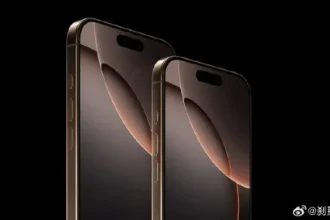
iOS 26 looks fresh, playful, and very glassy. But behind the shiny new “Liquid Glass” look, there’s a bigger story brewing. A veteran iPhone app designer just connected a few dots that suggest Apple’s next big hardware leap: an iPhone where the display flows right into the edge, with almost no visible bezel at all.
What Sparked the Hint of Apple Bezel Free iPhone
Craig Hockenberry, who’s been building iPhone apps since day one, shared a sharp observation while tuning his app for iOS 26: avoid putting controls that touch the screen’s edge. That nudge from Apple feels familiar—like when “safe area insets” showed up in iOS 11 just before iPhone X made notches and the home indicator a reality. He also noticed Apple pushing “Edge alignment,” their way of aligning interface elements with the physical hardware, which sounds small but usually means Apple is lining up software with what’s coming in hardware.
In his words, Apple seems “close to introducing devices where the screen disappears seamlessly into the physical edge,” using flexible OLED to blur pixels and bezel—think a subtle “wraparound” screen with new safe areas on the vertical edges, much like how the iPhone X era reshaped the top and bottom margins.
Why Liquid Glass matters
Liquid Glass isn’t just a coat of paint. Apple rolled it out across platforms at WWDC 2025, pitching translucent, dynamic “glass” that reacts to movement and light. It’s a bold visual language shift that—historically—Apple uses to acclimate everyone before a big hardware change. Even the lock screen, icons, widgets, and controls now feel like they’re part of a real, physical sheet of glass, not boxes sitting on top of it. Apple has already been refining it in recent betas after early readability pushback, which shows they’re serious about making it work day-to-day.
If the UI is teaching developers to keep content away from edges—and the system visuals are literally more “glassy”—that’s a strong clue: Apple’s prepping apps (and users) for screens that curve toward the frame or meet the chassis without the usual borders.
The 2027 clue: all-glass, truly bezel‑less iPhone
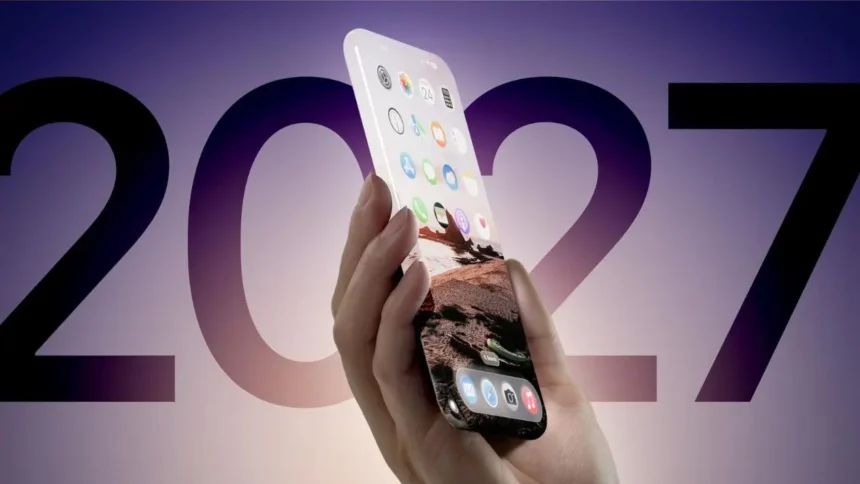
Multiple reports this year point to Apple targeting 2027—iPhone’s 20th anniversary—for a radical design: a “mostly glass,” truly edge‑to‑edge iPhone with no visible bezel and no display cutouts on at least one Pro model. Korean outlet ETNews, echoed by Bloomberg and The Information via coverage, described “four‑edge” or “quad‑curved” display tech that wraps around all sides, not just the left and right. That lines up neatly with what Hockenberry’s seeing in Apple’s current design guidance for iOS 26.
So while most folks see Liquid Glass as a cool visual update, developers are picking up the underlying hint: Apple is aligning the software with a more seamless, all‑screen iPhone experience.
What to watch next
- App layout shifts: Expect more guidance—and maybe new APIs—that encourage spacing away from edges and layouts that adapt if the vertical sides become “unsafe” for taps or text.
- Refined Liquid Glass: Apple’s already tuning the look in later iOS 26 betas to balance clarity and style, which suggests this design is foundational, not a one‑off theme.
- Hardware timing: Big UI overhauls at Apple often precede major hardware by 12–18 months. With iOS 26 out this year, the 2026–2027 window looks right for a bezel‑free iPhone debut, with stronger reporting pointing to 2027 for the most ambitious version.
Final thought
iOS 26 tells a clear story if paying attention: keep content away from edges, embrace Apple‑controlled shapes, and get used to software that feels like real glass. That’s classic Apple foreshadowing. The next milestone iPhone—likely in 2027—aims for an all‑screen, wraparound look that minimizes the line between pixels and the phone’s frame. And Apple’s Liquid Glass feels like a dress rehearsal for the bezel-free iPhone coming in 2027.
Also Read | The Upcoming iPhone Fold Screen Size Leak
Also Read | iOS 26 vs Android 16: Real-World Features That Actually Matter
Sources: Apple Newsroom (WWDC 2025), Craig Hockenberry (furbo.org)